No products in the cart.
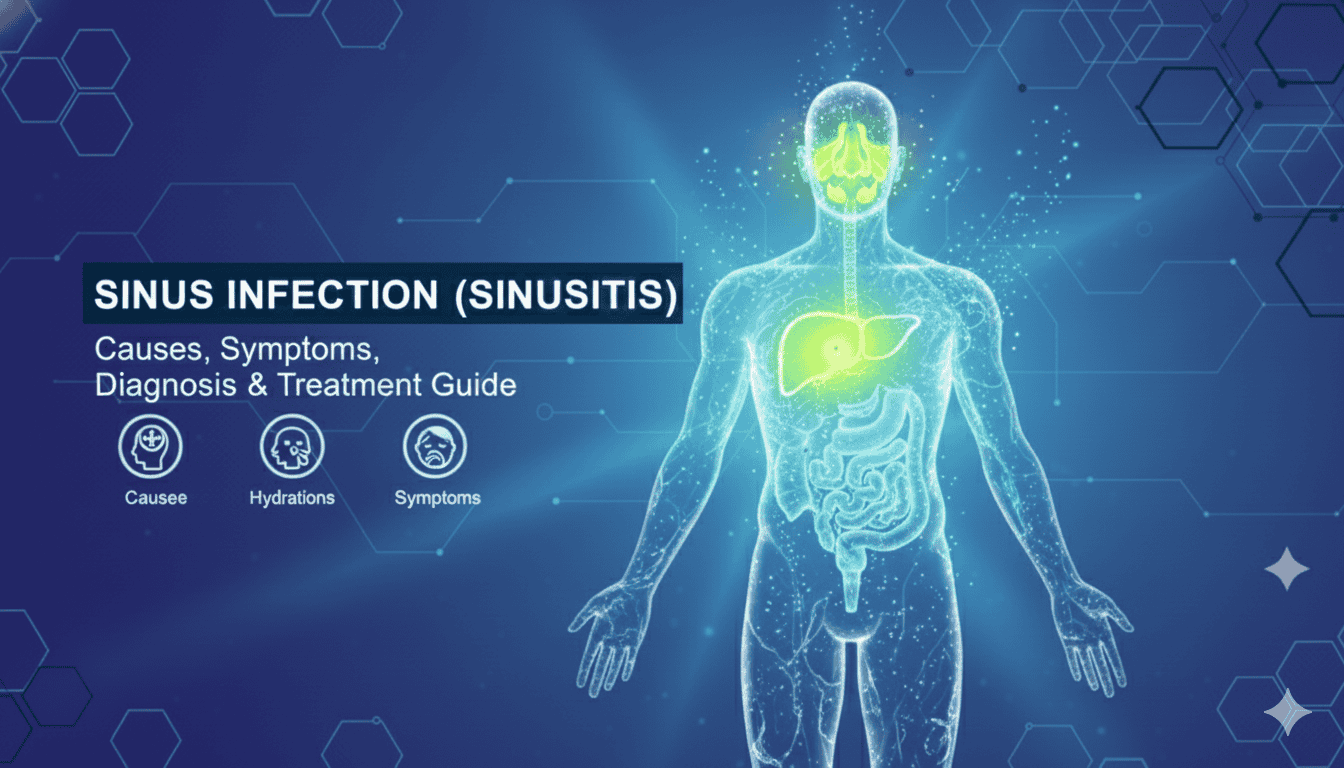

A sinus infection, also known as sinusitis, is a common condition that affects millions of people each year. It occurs when the air-filled spaces around your nose (sinuses) become inflamed or blocked, often leading to congestion, headaches, facial pressure, and difficulty breathing. Although sinusitis is usually not serious, the discomfort can interfere with sleep, productivity, and daily life.
Understanding the causes, symptoms, diagnosis, and treatment options for sinus infections can help you manage the condition more effectively and prevent recurring episodes.
A sinus infection happens when the tissues lining the sinuses become swollen due to infection, allergies, or irritation. This inflammation traps mucus inside the sinuses, creating pressure and providing a breeding ground for bacteria or viruses.
Sinusitis can be:
Acute: Lasts up to 4 weeks
Subacute: Lasts 4–12 weeks
Chronic: Lasts 12 weeks or longer
Recurrent: Several episodes per year
Several factors can trigger or contribute to sinusitis:
Most sinus infections begin as a common cold caused by a virus.
If symptoms last more than 10 days or worsen after initial improvement, bacteria may be involved.
Allergic reactions cause swelling in sinus passageways, increasing mucus buildup.
Noncancerous growths that block sinus drainage.
Crooked nasal structure that makes mucus drainage difficult.
Pollution, smoke, and chemicals can trigger sinus inflammation.
Rare, but more common in people with weakened immune systems.
Symptoms vary depending on the severity and type of sinusitis, but the most common include:
Nasal congestion
Thick yellow or green mucus
Facial pressure or pain (forehead, cheeks, eyes)
Headache
Reduced sense of smell or taste
Fever
Sore throat
Cough (worse at night)
Ear pressure
Fatigue
Bad breath
If symptoms last more than 10 days, worsen suddenly, or keep returning, medical advice is recommended.
When you visit a healthcare provider, evaluation may include:
Your doctor will ask about duration, severity, and previous episodes.
The provider checks your nose, throat, and sinuses for swelling or mucus buildup.
A thin, flexible tube used to view the sinus passages.
In chronic or complicated cases:
CT scan
X-ray
If sinus infections are triggered by seasonal or year-round allergies.
Treatment depends on whether the sinus infection is viral, bacterial, allergic, or chronic.
Effective for mild to moderate sinus infections:
Steam inhalation
Warm compresses on face
Saline nasal sprays or rinses
Hydration
Adequate rest
Depending on the cause:
Decongestants (short-term use)
Antihistamines (for allergies)
Nasal corticosteroid sprays (reduce inflammation)
Antibiotics (only for confirmed bacterial infections)
Pain relievers (ibuprofen, acetaminophen)
For chronic, severe, or recurrent sinusitis:
Removal of nasal polyps
Correction of deviated septum
Functional endoscopic sinus surgery (FESS) to open blocked sinuses
You can reduce the likelihood of developing sinusitis with these preventive steps:
Avoid allergens and irritants
Use a humidifier to keep indoor air moist
Stay hydrated
Practice good hand hygiene
Treat colds and allergies early
Avoid smoking or secondhand smoke
Use nasal saline rinses regularly
Seek medical attention if you experience:
Symptoms lasting more than 10 days
Symptoms that worsen after initial improvement
Severe facial pain or swelling
High fever
Vision changes
Frequent sinus infections (3–4 per year)
Chronic sinusitis may require long-term management or specialized care.
Viral sinus infections can be contagious; bacterial sinusitis is usually not.
Yes. Pressure in the maxillary sinuses can cause upper tooth pain.
Yes. Untreated allergies are one of the top causes of recurrent sinusitis.
Viral sinusitis usually lasts 7–10 days. Bacterial infections may last longer or require treatment.
Sinus infections are extremely common and often manageable with proper care, rest, and treatments. While most cases improve on their own, persistent or severe symptoms may require medical evaluation. Understanding the causes, symptoms, diagnosis, and treatment options for sinusitis empowers you to take better control of your respiratory health and prevent future episodes.

Comments are closed.








 drtomarswellness.com



1 Comment