No products in the cart.
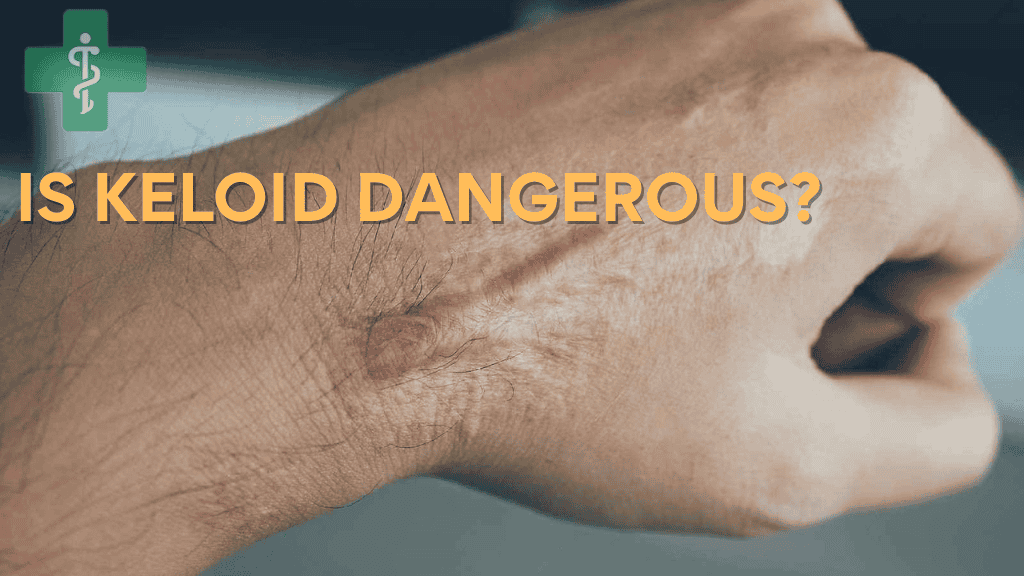

It feels uncomfortable to see a raised, thick scar on your skin, particularly when it keeps on increasing beyond the wound. The first thing that comes to the minds of many people is to worry and pose the same two questions:
Is keloid dangerous?
Is keloid cancerous?
Such fears are quite reasonable. The alterations in the skin may appear to be frightening, and fake news tends to make the problem more anxious. Within the context of this lengthy, polished, optimized for search engines, blog, we will state exactly what keloids are, if they are bad, and when (or even whether) you should worry.
A keloid is a scar tissue which grows in excess of an injured healed skin. Keloids unlike normal scars spread beyond the area of the initial wound and may further extend as time progresses.
Keloids occur as a result of excess production of collagen in the healing process. They are neither infections, tumors nor indications of an inward sickness.
Full, rounded, or bumpy
Smooth and shiny surface
Pink, red, brown or darker than surrounding skin
Can feel firm or rubbery
May itch, burn, or feel tender
The keloids may be manifested weeks or months after the skin injury has healed.
Keloids are not damaging to a health. They do not harm internal organs, infect the body and create life-threatening complications.
Most keloids:
Are only a cosmetic concern
Do not affect overall health
Reduce not life expectancy
A lot of individuals have been known to live with keloids over a long period without any severe medical conditions.
Keloids are not dangerous; they can lead to discomfort or emotional distress particularly when they are huge or even when they are sited in visible places.
Keloids can be problematic when they:
Bring about constant itching or pain
Limit mobility (around joints)
Get sore through rubbing
Influence confidence or self esteem
Treatment can be suggested in such cases not because the keloid is harmful, but to increase the comfort and quality of life.
Keloids are harmless scar tissue rather than tumor and cancer. They:
Should not extend to other areas
Invasion of neighboring tissues such as cancer should be avoided
Do not turn into skin cancer
Among the most significant facts that are necessary to know is:
A keloid is not a cancer that develops with time.
This myth brings about unnecessarily feared and makes many people worry more than necessary.
In isolated instances, individuals may mistake keloids with other skin diseases because of their looks. Nonetheless, physicians can generally tell the difference between a keloid depending on:
History of skin injury
Normal scar-like growth pattern
Location and texture
In the case of doubt, a dermatologist can suggest additional examination to make sure that the diagnosis is correct. This is simply to be on the safe side.
Keloids are caused by a pathological response of the skin.
Surgical cuts
Ear piercing
Acne scars
Burns
Cuts or scratches
Vaccination sites
Hereditary disposition (family history)
Darker skin tones
Age between 10 and 30 years
Previous history of keloids
All people who sustain a wound do not get a keloid. Other individuals are just more susceptible to them.
The keloids may be located anywhere on the body but most common on:
Chest
Shoulders
Upper back
Earlobes
Jawline and cheeks
These are not common on palms, soles or eyelids.
| Feature | Normal Scar | Keloid |
|---|---|---|
| Growth | Cessation of growth upon healing | Persistence of growth |
| Size | Confined to wound | Beyond wound |
| Feel or Slightly raised | Thick and raised | |
| Symptoms | None, or itching or pain in the most cases | |
| Risk | Harmless | Harmless |
This difference is understood to minimise unneeded fear.
A simple physical examination is normally used to diagnose keloids. Doctors consider:
Appearance
History of injury
Growth pattern
Skin biopsy (only not clear in diagnosis)
In the majority of cases, no examinations are required.
The Keloids in the majority of cases do not require treatment.
If a keloid is:
Small
Painless
Not growing rapidly
Avoiding emotional distress
Then there may be no need of treatment.
The treatment can be considered in case:
The keloid brings about pain or itching
It interferes with movement
It grows significantly
It has an influence on confidence or life
Helps flatten the keloid
Reduces itching and redness
Frequently takes sessions
Used regularly over time
Helps soften and reduce size
Improves texture and color
Frequently used together with other procedures
Best for smaller keloids
Shrinks scar tissue
High risk of recurrence
Normally used together with other therapies
There is no one cure that is certain of complete elimination and it is usual to relapse.
Keloids may recur, successful treatment notwithstanding. Actually, keloids is one of the skin conditions that have one of the highest rates of recurrence.
That is the reason why the treatment is aimed not at the permanent cure but at the management.
You will need to see a medical practitioner in case:
The scar grows rapidly
Pain or itching worsens
The scar either becomes inflamed or infected
You are not even sure that it is a keloid
The look is emotionally disturbing
Premature counseling assists in improved management.
Is keloid life-threatening?
No, keloids are not life threatening.
Are keloids contagious to other body parts?
No, keloids are confined to the scar.
Is it possible that keloids can vanish on their own?
Keloids do not tend to fade away without any treatment.
Does stress cause keloids?
No scientific data has been found to be associated with keloid formation and stress.
Keloids are NOT dangerous
Keloids are NOT cancerous
Keloids do not become cancerous
Even though keloids might appear alarming and might be something uncomfortable or aesthetically displeasing, they are medically harmless. It is important to understand the condition so that fear is replaced with confidence.
In case you are confused or upset by a scar, it is possible to get professional guidance, which will provide you with the necessary reassurance and the necessary management practices.
This is an educational blog and not a substitute of medical advice. In case of insomnia, lasting or progressing, it should be addressed by an experienced medical worker who will evaluate and treat the patient accordingly.
Chronic conditions require the right approach. If you are unsure which
medicine or treatment plan is suitable for your condition, our care team
is here to support you.
Share your concern with us and receive personalized guidance based on
your symptoms and health needs.









 drtomarswellness.com



Leave a comment