No products in the cart.
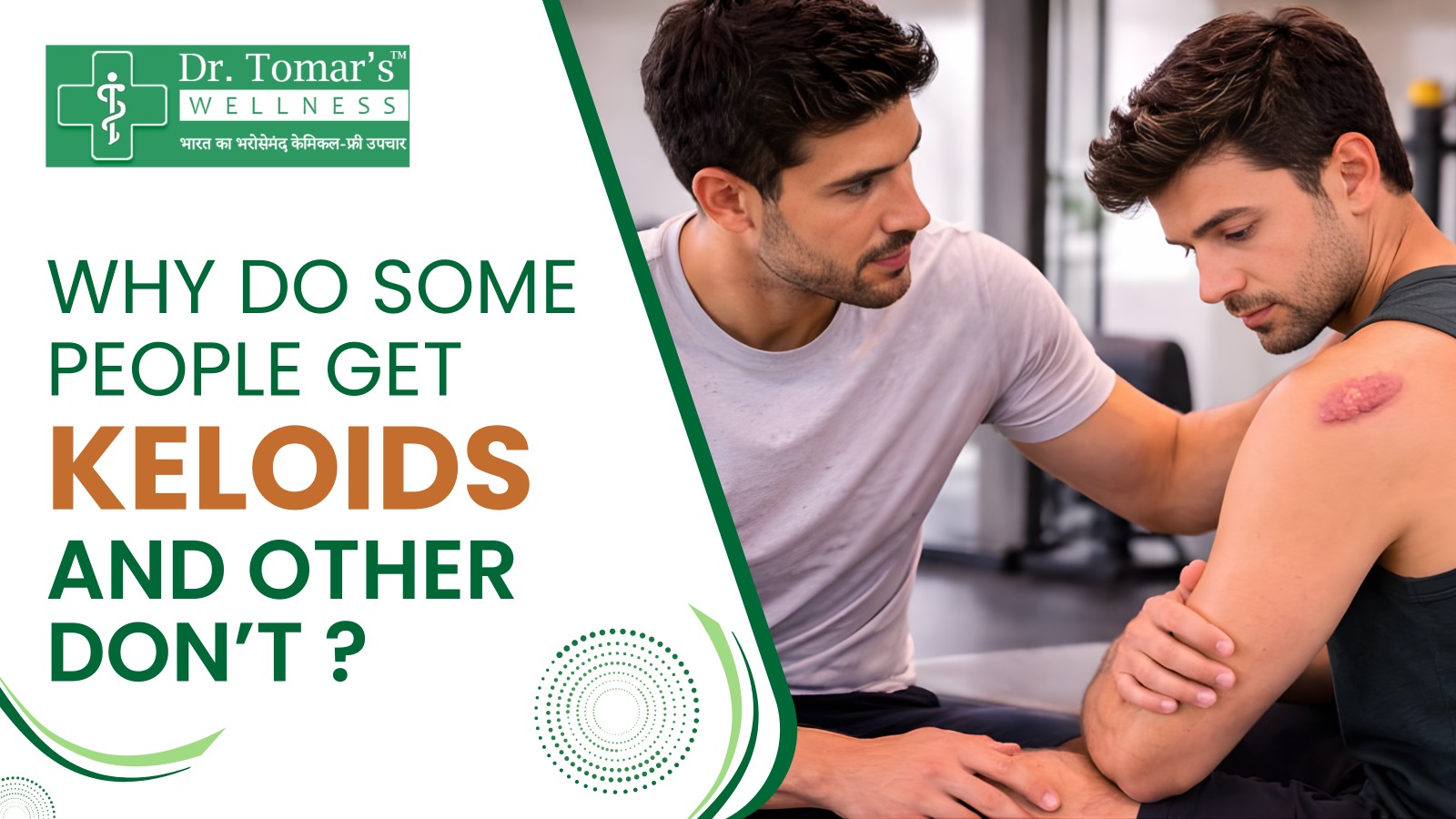
why do some people get keloids and other don’t ? when you have ever observed that some individuals recover with the slightest cut made, or with acne, piercing, or surgery, with scarring so slight as to pass unnoticed—and others with hard, elevated scars—you are not alone in asking why. These are the elevated scars which may be scars in the form of keloids and may be frustrating, uncomfortable and emotionally painful.
The solution is in a combination of genetic factors, skin biology, immune reaction, and external factors.
Let’s break it down.
A keloid is an excess of scar tissue or growth of scar tissue, which develops as a result of excessive collagen synthesis of the body in the process of healing the wound. Unlike normal scars, keloids:
Grow bigger than the initial wound
Is able to be thick, shiny, and raised
May either itchy or tender or pained
Do not shrink on their own
They can appear after:
Cuts or burns
Acne
Ear or body piercings
Surgery
Vaccinations or injections
Most strange is that the injury itself is sometimes of trivial significance—sometimes hardly perceptible.
The most important process in developing keloids is the healing process.
Injury to skin activates your body to fix it:
Inflammation begins
Collagen synthesis is done to repair tissue
The wound is closed and remodelling takes place
This process does not turn off well in individuals likely to develop keloids. Collagen production does not just cease after the skin has been mended, it goes on resulting in the development of excess scar tissue.
But why then so to some people?
The role of genetics in the development of keloids is the biggest.
If:
Both parents or one of them has keloids
Scarring in close relatives is severe
Then you have a much greater risk.
This implies that there are genes passed on to some people, which result in:
Fibroblasts that are functioning too fast (cells which produce collagen)
Prolonged inflammation
Disturbed signals of wound-healing
Simply stated, your skin may have been genetically programmed to be overprotective of a wound.
Keloids are found more in those with darker skin including:
African
South Asian
East Asian
Middle Eastern
Hispanic backgrounds
It is not melanin that leads to keloids but the genes linked to pigmentation seem to be connected with the control of collagen and inflammation.
Important note:
This does not imply that keloids cannot appear in lighter skin—it is just that the probability is greater in the darker types of skin.
There are certain parts of the body that are much more susceptible to keloids than there are others.
High-risk areas include:
Chest and upper back
Shoulders
Jawline
Earlobes
Neck
These areas experience:
Higher skin tension
More movement
Sharpening up of the collagen
This is the reason ear piercings and chest acne are popular triggers.
Individuals that develop keloids develop a more intense or sustained inflammatory reaction.
This means:
There is an increased duration of redness and swelling
Healing signals stay active
Scar tissue will keep on increasing
The existence of such inflammatory environment can be augmented by such conditions as acne, eczema, or frequent irritation of skin, which increases a risk of abnormal scarring.
Depending on your condition and wellness goals, you may also find the following treatment plans helpful:
Unhealthy habits, errors and things that you did wrong are not the cause of keloids. Their development is the complicated product of the interplay between the genetics, skin biology, immune response and the environment.
Some people heal quietly.
Others heal loudly.
Knowing the reasons behind the occurrence of keloids will help eliminate the blame factor and consideration of wiser prevention and treatment options.
When you find yourself in difficulties with keloids or your clients, the first thing to do is to control—and be confident—with what you know.
Chronic conditions require the right approach. If you are unsure which
medicine or treatment plan is suitable for your condition, our care team
is here to support you.
Share your concern with us and receive personalized guidance based on
your symptoms and health needs.






 drtomarswellness.com



Leave a comment