No products in the cart.
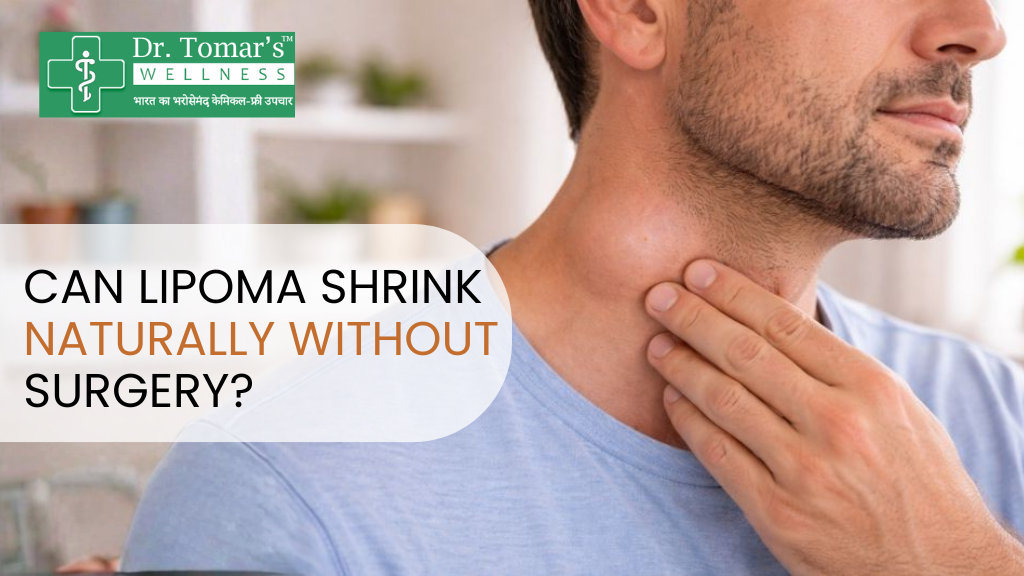

Finding a soft lump under your skin can immediately trigger concern. Many people assume surgery is the only solution and start searching for natural ways to make it disappear. One of the most frequently asked questions is:
Can lipoma shrink naturally without surgery?
The medically accurate answer is: in most cases, lipomas do not shrink or disappear on their own. However, the full explanation is more nuanced. Some lifestyle changes may influence how noticeable a lipoma appears, and certain non-surgical treatments may reduce its size.
This comprehensive guide explains how lipomas behave, whether natural shrinkage is possible, and what options you realistically have.
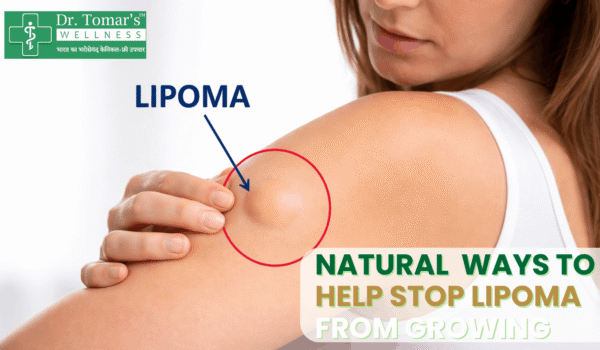
A lipoma is a benign (non-cancerous) growth made of fat cells that forms just beneath the skin. It is one of the most common soft tissue tumors in adults.
Soft and doughy texture
Painless in most cases
Slow-growing
Movable under the skin
Usually smaller than 5 cm (though some grow larger)
Lipomas can develop anywhere on the body where fat tissue exists, including:
Neck
Shoulders
Back
Arms
Thighs
Importantly, a lipoma is not cancer and does not usually become cancer. A rare cancer called Liposarcoma may resemble a lipoma but behaves very differently — it grows rapidly, feels firm or fixed, and is often painful.
In most cases, no — a lipoma does not naturally shrink or disappear.
Lipomas are composed of mature fat cells enclosed within a thin fibrous capsule. Once formed, this structure remains stable. The body does not usually break down or absorb the lipoma tissue on its own.
To understand why natural shrinkage is rare, it helps to know how lipomas form.
They are made of fully developed fat cells.
They are enclosed within a capsule.
They are not caused by infection or fluid buildup.
Unlike swelling caused by inflammation (which can reduce), lipomas are solid fatty masses. Because they are structured and encapsulated, they do not dissolve easily.
Many people believe that because lipomas are made of fat, losing weight will eliminate them. This is a common misconception.
When you lose body fat:
Overall fat tissue decreases.
Surrounding fat layers thin out.
The lipoma may appear slightly smaller.
However, the lipoma itself usually remains intact. Some patients report that the lump becomes less prominent, but it rarely disappears completely.
In fact, sometimes weight loss makes the lipoma more noticeable, because surrounding fat decreases while the lipoma stays the same size.
The internet is full of home remedies that claim to dissolve lipomas. Common suggestions include:
Herbal oils
Apple cider vinegar
Turmeric applications
Castor oil massage
Detox regimens
Warm compresses
Currently, there is no strong scientific evidence that these remedies shrink or remove lipomas.
While certain natural products may improve skin health or reduce mild inflammation, they do not break down encapsulated fat masses.
Be cautious of products claiming “guaranteed natural lipoma removal.” These claims are usually not supported by clinical research.
Although rare, there are situations where a lipoma may seem smaller:
Overall fat reduction can make the lump less visible.
Some lumps initially thought to be lipomas may actually be cysts or temporary swelling that later reduce.
Occasionally, hormonal shifts alter fat distribution slightly.
However, true spontaneous disappearance of a confirmed lipoma is uncommon.
In most cases, yes.
Lipomas are harmless and slow-growing. Many people live with them for years without complications.
You can safely monitor a lipoma if it is:
Small
Painless
Not growing rapidly
Not affecting daily activities
Doctors often recommend a “watch and wait” approach for stable lipomas.
You should seek medical evaluation if the lump:
Grows quickly
Becomes painful
Feels hard or fixed
Causes tingling or numbness
Interferes with movement
Changes in skin color
Rapid changes may require imaging tests like ultrasound or MRI to confirm diagnosis.
Although complete removal usually requires surgery, there are limited non-surgical approaches that may reduce size.
Corticosteroid injections may:
Shrink the lipoma slightly
Reduce inflammation
Be useful for small lipomas
However, they rarely eliminate the lipoma completely.
Liposuction can remove fatty tissue through a small incision.
Pros:
Smaller scar
Less invasive
Cons:
Capsule may remain
Slight risk of recurrence
If the lipoma is not bothersome, no treatment may be needed at all.
Yes.
Surgical excision is currently the only method that completely removes both:
The fatty tissue
The surrounding capsule
The procedure is:
Performed under local anesthesia
Usually completed within 30–60 minutes
Low-risk
Requires minimal recovery time
Recurrence after complete removal is uncommon.
Even though lipomas are medically harmless, they can still cause emotional stress.
People may feel:
Fear of cancer
Embarrassment (especially if visible on neck or arms)
Anxiety about growth
Frustration about appearance
Choosing removal for cosmetic reasons or peace of mind is completely valid. Medical necessity is not the only factor to consider — mental comfort matters too.
For more detailed guidance, you may explore:
These resources provide deeper insight into treatment strategies, lifestyle management, and recovery expectations.
In most cases, no. Lipomas typically remain stable unless removed surgically.
Exercise improves overall health and reduces body fat, but it does not directly dissolve a lipoma.
No scientific evidence supports massage as a method to remove or shrink lipomas. Excessive pressure may cause irritation.
Warning signs include rapid growth, firmness, pain, or being fixed in place. A doctor can confirm diagnosis through examination or imaging.
No. While overall health matters, lipomas are not directly caused by unhealthy eating habits.
If completely excised along with the capsule, recurrence is rare. Partial removal increases recurrence risk.
Most lipomas are harmless. However, new or changing lumps should always be evaluated to confirm diagnosis.
There is no proven link between stress and lipoma growth.
So, can a lipoma shrink naturally without surgery?
For the vast majority of people, no — lipomas do not shrink or disappear on their own. They are stable, encapsulated fatty growths that usually remain unless treated.
The reassuring news is that lipomas are benign and rarely dangerous. Many people safely live with them for years without needing intervention.
If the lipoma is small, painless, and not growing, monitoring is often sufficient. If it becomes uncomfortable, enlarges, or causes emotional distress, effective treatment options are available.
Always consult a qualified healthcare professional for proper diagnosis and personalized guidance.
AUTHOR BIO :- Dr. Jitender Tomar is an Electropathy practitioner with 23+ years of clinical experience in natural and holistic healthcare. Through Dr Tomars Wellness, he shares educational insights on preventive health, early disease symptoms, and lifestyle-based wellness approaches to help readers make informed health decisions.








 drtomarswellness.com


Leave a comment