No products in the cart.
Is this normal? Is it getting worse? Is it something dangerous?
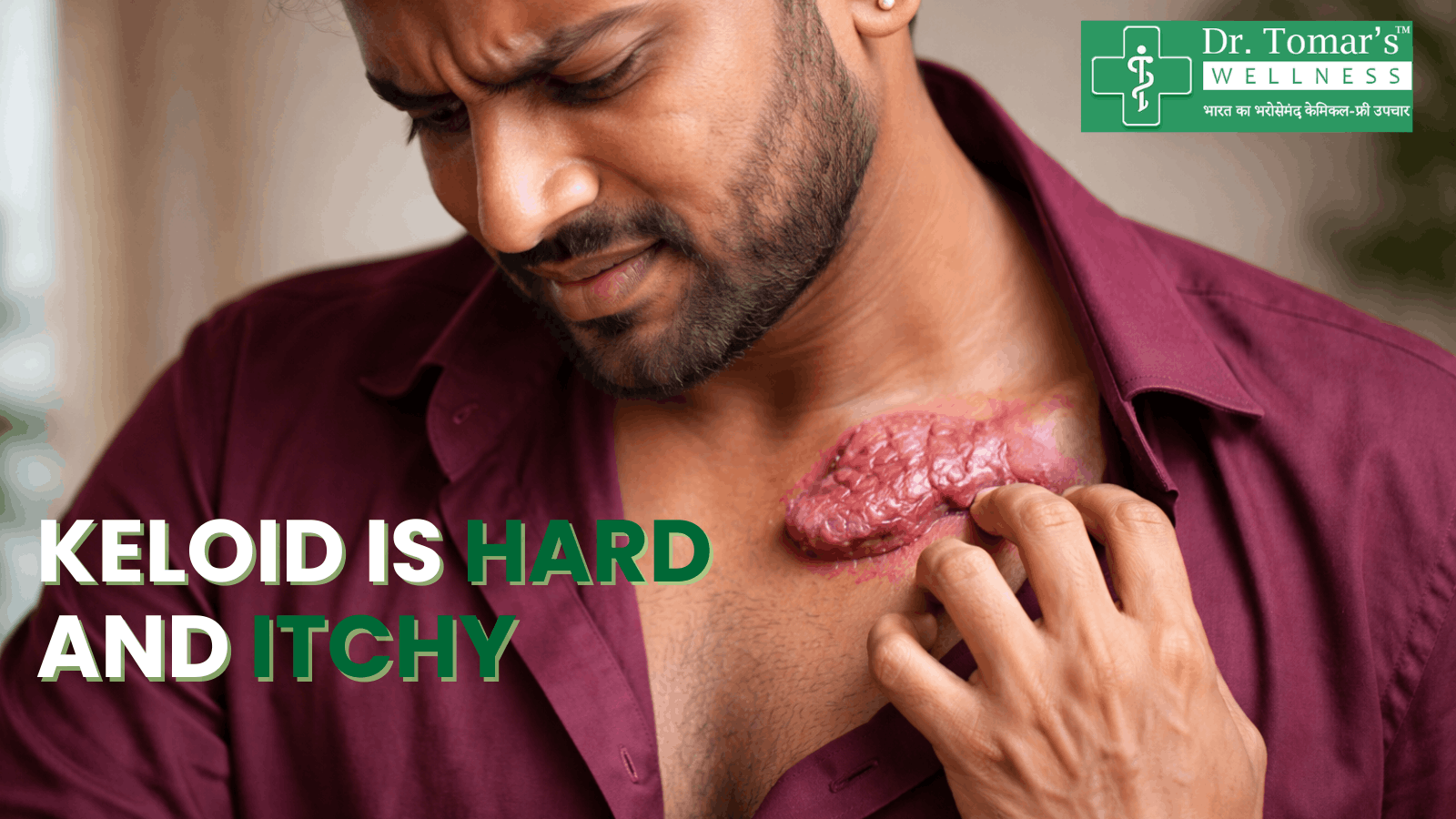
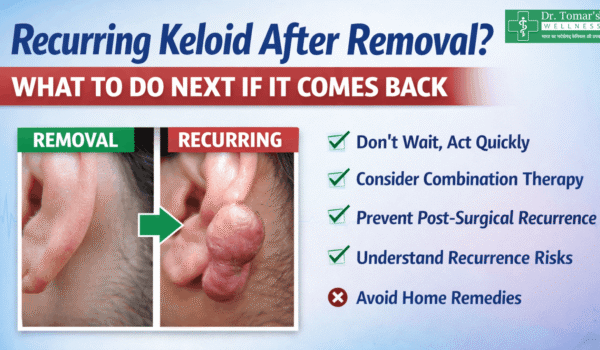
If your keloid is hard and itchy, don’t panic — but don’t ignore it either. In most cases, this combination is part of how keloids behave. However, understanding why it happens helps you decide whether monitoring is enough or treatment is needed.
Let’s break this down clearly.
A keloid forms when the body produces excess collagen during wound healing. Instead of stopping when the skin closes, collagen production continues.
This extra collagen builds up in dense bundles, which causes:
Thickening of the scar
Firm or rubbery texture
Raised appearance
Gradual enlargement
The hardness you feel is due to dense collagen fibers packed tightly together.
Not necessarily.
Many keloids are naturally firm. In fact, firmness is one of their defining features.
However, sudden changes in texture — especially if the scar becomes significantly harder than before — should be evaluated.
Itching is extremely common in keloids.
Here’s why:
As collagen builds up, it can irritate nearby nerve endings. This triggers itching or a crawling sensation.
Keloids are not “inactive” scars. They often remain biologically active for years. This activity can cause:
Itching
Mild burning
Sensitivity
As the scar thickens, surrounding skin stretches slightly. That tension may cause itching.
For many patients, itching comes and goes. It may worsen:
In hot weather
During stress
At night
During hormonal changes
Your keloid is likely behaving typically if:
It has been firm for a long time
Itching is occasional, not severe
There is no bleeding or ulceration
The scar grows slowly
There are no signs of infection
In these cases, hardness and itching are part of the keloid’s natural behavior.
While keloids are benign (non-cancerous), certain changes require medical attention.
Seek evaluation if:
The scar becomes rapidly larger
It develops open wounds
Severe, constant pain occurs
There is discharge or infection
The surface becomes crusted or bleeding
The color changes dramatically
Hardness + mild itching = usually normal.
Hardness + rapid change + pain = get checked.
Not always.
Keloids often go through phases:
Active Phase – Growth, redness, itching
Mature Phase – Firmer, darker, less growth
Stabilized Phase – Minimal change
Hardness can simply mean the scar has matured.
However, if itching increases significantly along with size, the keloid may still be in its active growth phase.
Yes.
Treatment aims to:
Soften scar tissue
Reduce inflammation
Control itching
Prevent further growth
Common treatment options include:
Reduce inflammation and soften scar tissue.
Help flatten and soften over time.
Improves color and texture.
Freezes smaller keloids.
Some patients prefer non-surgical management before invasive procedures.
The right treatment depends on size, location, duration, and symptoms.
Let’s address something important.
Hardness and itching are not just physical symptoms — they affect your mental peace.
Many patients report:
Constant awareness of the scar
Fear that it is worsening
Embarrassment
Anxiety about cancer
Frustration with long-term persistence
It’s completely valid to want relief — even if the keloid is medically harmless.
This is a very common fear.
Keloids do not turn into cancer.
Skin cancers behave differently:
Irregular borders
Rapid destructive growth
Ulceration
Bleeding
Severe pain
If you’re unsure, a dermatologist can confirm the diagnosis through examination.
But hardness alone does not equal malignancy.
Yes.
Scratching:
Increases inflammation
Stimulates more collagen production
May worsen thickening
Can lead to skin breakdown
If itching is intense, seek treatment instead of scratching repeatedly.
If your keloid is hard and itchy:
✔ Avoid scratching
✔ Keep the area moisturized
✔ Protect from sun exposure
✔ Avoid friction from clothing
✔ Consider medical consultation if symptoms increase
Early management often prevents further thickening.
Yes. Firmness is a common characteristic of keloids due to dense collagen buildup.
Reduced distractions and mild inflammation can make itching more noticeable at night.
Not always. Itching can occur even in stable keloids, but persistent itching may indicate active collagen production.
In some cases, treatments like steroid injections or silicone therapy can soften the scar.
Removal is considered if symptoms are severe or affecting quality of life. Conservative treatments are often tried first.
Stress may increase inflammatory responses, which can make itching feel worse.
They can persist for years, but treatment may improve texture and symptoms.
A hard and itchy keloid is usually part of its natural behavior — not a sign of cancer.
However, increasing symptoms or rapid changes deserve medical evaluation.
Awareness brings control.
Early management prevents worsening.
And most importantly — you are not alone in this.
If your keloid is causing discomfort or anxiety, professional guidance can help you choose the safest next step.
Dr. Jitender Tomar is an Electropathy practitioner with 23+ years of clinical experience in natural and holistic healthcare. Through Dr Tomars Wellness, he shares educational insights on preventive health, early disease symptoms, and lifestyle-based wellness approaches to help readers make informed health decisions.







 drtomarswellness.com


Leave a comment