No products in the cart.
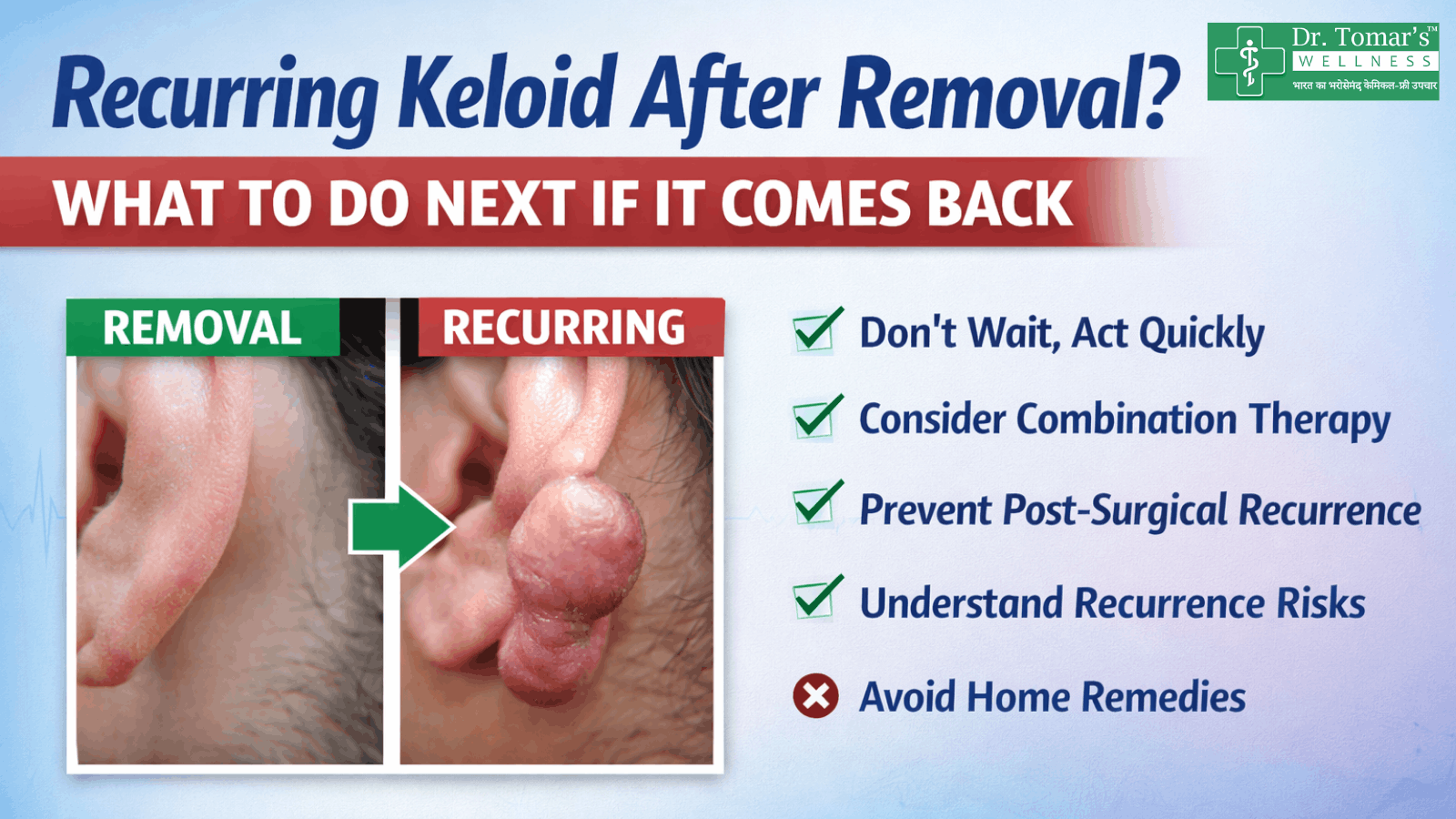
You went through the procedure.
You waited for healing.
And now… the keloid is coming back.
If you’re dealing with a recurring keloid after removal, you’re not alone. Keloids are known for returning — sometimes larger than before — if not treated with the right long-term strategy.
The good news? Recurrence can be controlled. And in many cases, prevented.
This blog explains why keloids come back, what you should do immediately, and the most effective treatment options available today.
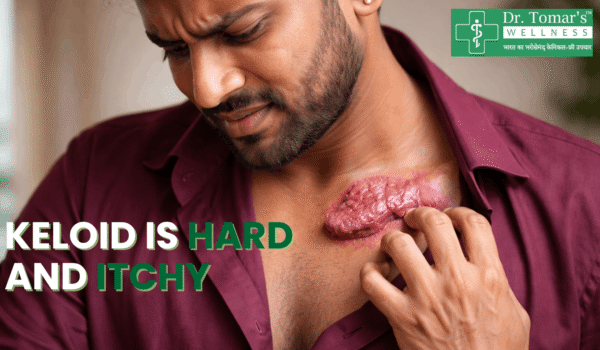
Keloids form when the body produces excess collagen during wound healing. Unlike normal scars, they grow beyond the original wound boundaries.
When a keloid is surgically removed without proper follow-up therapy, the body may:
Trigger another aggressive healing response
Produce even more collagen
Form a thicker, larger scar
This is why surgery alone has a high recurrence rate if not combined with additional treatments.
Watch for these early warning signs:
Mild itching or tingling at the previous scar site
Thickening of the scar
Raised or firm skin texture
Gradual spreading beyond the original incision
Early intervention is critical. The sooner treatment begins, the better the outcome.
Many patients wait months hoping it will settle down. Keloids rarely shrink on their own. Early medical treatment significantly improves control.
If you’ve already had removal, schedule a follow-up with a specialist immediately.
👉 Learn more about advanced scar management options on our Keloid RemovalTreatment Services page.
Modern keloid management is rarely a single treatment. The best results often come from combining therapies such as:
Reduce inflammation and collagen production.
Help flatten and soften scar tissue.
Used especially for ear keloids.
Improves redness and reduces thickness.
Explore our detailed approach here:
👉 Advanced Keloid Removal & Scar Therapy
If surgical removal was done, it must be followed by preventive therapy such as:
Intralesional steroid injections
Silicone therapy for several months
Close monitoring for early regrowth
Without aftercare, recurrence rates can be high.
You may be more prone to recurrent keloids if you:
Have a family history of keloids
Have darker skin tones
Developed keloids at a young age
Experienced repeated trauma at the scar site
Knowing your risk helps tailor a long-term prevention plan.
A recurring keloid isn’t just a physical issue.
It can cause:
Embarrassment
Anxiety about appearance
Frustration after failed treatment
Social discomfort
If your keloid affects visible areas like the ear, chest, jawline, or shoulder, the emotional burden can be significant.
The key is not to lose hope — modern treatment protocols are far more effective than older standalone surgery methods.
Often the first-line treatment for recurrence. Helps flatten and soften tissue over multiple sessions.
Improves texture and redness while enhancing steroid absorption.
Freezes abnormal scar tissue to reduce volume.
For large or stubborn keloids, surgery may still be recommended — but only with strict post-procedure therapy.
Read more about personalized solutions here:
👉 Non-Surgical & Surgical Keloid Treatment Options
If your keloid is coming back:
❌ Don’t apply random home remedies
❌ Don’t massage aggressively
❌ Don’t try over-the-counter scar creams without guidance
❌ Don’t wait too long
Delaying treatment allows collagen buildup to continue.
“Keloid cure” is a misleading term.
The realistic goal is:
Flattening the scar
Reducing symptoms (itching, pain)
Preventing further growth
Minimizing cosmetic impact
With the right combination therapy, recurrence can be significantly reduced.
Seek medical attention if:
The scar becomes thicker again
Itching or pain increases
Redness or swelling develops
The keloid spreads beyond its previous borders
Early-stage recurrence is easier to control than advanced regrowth.
Because surgery alone often stimulates collagen production. Without preventive therapy, recurrence is common.
It may begin within weeks to months after surgery.
There may be mild discomfort, but sessions are quick and manageable.
Laser helps reduce thickness and redness, especially when combined with steroid therapy.
There is no guaranteed permanent cure, but long-term control is possible with combination treatment.
No strong scientific evidence supports home remedies for controlling recurrence.
Stress does not directly cause keloids, but inflammation and healing response play a role.
A recurring keloid after removal can feel discouraging — but modern scar management has evolved significantly.
The key steps are:
✔ Early diagnosis
✔ Combination therapy
✔ Strict follow-up care
✔ Personalized treatment planning
If you’re noticing early signs of regrowth, take action now. The sooner you intervene, the better the long-term results.
For expert guidance, explore our full range of Keloid Treatment Services and book a consultation today.
Dr. Jitender Tomar is an Electropathy practitioner with 23+ years of clinical experience in natural and holistic healthcare. Through Dr Tomars Wellness, he shares educational insights on preventive health, early disease symptoms, and lifestyle-based wellness approaches to help readers make informed health decisions.






 drtomarswellness.com


Leave a comment